
Supplier Switch
Solar Panel With Battery System Installation Cost Calculator
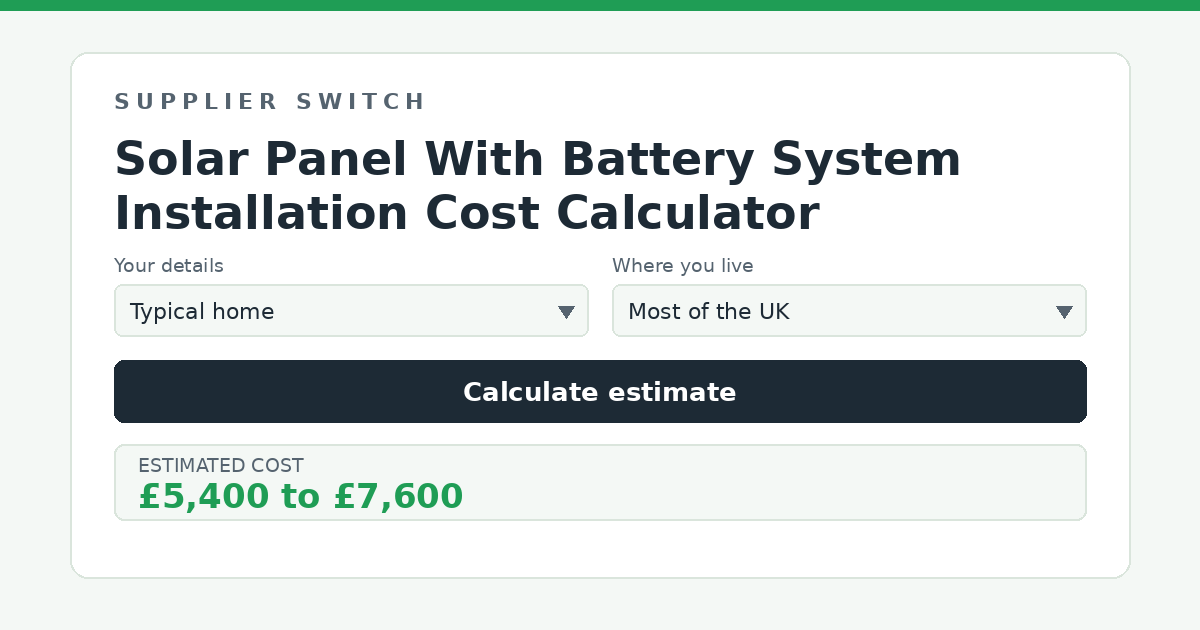
Estimate the combined cost of installing solar panels and battery storage together, the most popular configuration for new UK installations in 2026.
Estimated combined installed cost
All figures are indicative ranges based on published UK guides and scheme documentation. Real quotes, generation and savings vary – see the explainer and disclaimer below.
How this calculator works
This calculator works in ranges rather than single figures, because real quotes, yields and tariffs genuinely vary that much. It starts from typical UK price, output and savings ranges drawn from published 2026 industry guides and official scheme documentation, then scales them by the quantities you enter and adjusts them for each choice you make below. The result is a low-to-high band that a realistic outcome is likely to fall within, not a promise of the figure you will achieve.
A combined solar and battery installation for an average home typically costs to in 2026, for example a 4 kWp array with a 5 to 10 kWh battery. Installing both together is meaningfully cheaper than adding a battery later, because the hybrid inverter, electrical work and installer visit are shared, and the whole package qualifies for 0 percent VAT until 31 March 2027.
System size
Solar systems are sized in kilowatts peak (kWp), the output of the panels under standard test conditions. A 4 kWp system of around 10 modern panels is the most common choice for a UK three bedroom home, while larger households, or homes with an electric vehicle or heat pump, often go to 6 kWp or more. Bigger systems cost less per kWp because fixed costs such as scaffolding, the inverter and installer overheads are spread across more panels, and the calculator reflects that economy of scale.
Battery capacity
A useful rule of thumb is to size the battery around your evening and overnight usage, commonly 5 to 10 kWh for an average home. Larger batteries pair well with time-of-use tariffs and electric vehicles, letting you charge cheaply overnight in winter as well as storing solar in summer. Cost per kWh falls as capacity rises.
Equipment tier
Panel brand and inverter choice move a quote by to on a typical system. Budget panels from lesser-known makers cost less but degrade faster and carry shorter warranties. Mid-range covers the established Tier 1 brands most reputable installers fit by default, typically with 25 year performance warranties. Premium covers high-efficiency panels and microinverter or optimiser setups, which cost around 20 percent more and earn their keep mainly on shaded or complex roofs.
Where you live
Installation labour is not priced uniformly across the UK. Published guides put London and South East installation costs roughly 15 to 25 percent above the national average, reflecting labour rates, access and parking. Hardware prices are broadly national, so the difference is mostly in the fitting.
What else affects the figures
The battery changes how the system earns its keep: self-consumption rises from roughly 45 percent to 70 to 85 percent, cutting evening grid imports, and on a time-of-use tariff the battery can also charge cheaply overnight. Against that, the battery raises upfront cost and will likely need replacing once within the panels’ 25 to 30 year life, so the strongest combined cases are homes with meaningful evening usage, an EV or a heat pump. When comparing quotes, check the usable capacity rather than headline capacity, the warranty in cycles or throughput, whether backup during power cuts is included, and that the inverter is sized sensibly for both the array and the battery.
Certification, planning and grid connection
Most home solar installations fall under permitted development and need no planning permission, provided panels do not protrude more than 200 millimetres from the roof plane, though listed buildings and flats have tighter rules and conservation areas restrict panels on walls fronting the highway, so check with your local planning authority if any apply. Use an MCS-certified installer: certification is required to register for Smart Export Guarantee payments and is the industry marker of a compliant installation. Your installer must also notify or seek approval from the district network operator, automatically for systems up to 3.68 kW per phase under G98 and by prior application under G99 above that. Residential solar and battery installations carry 0 percent VAT until 31 March 2027, after which the rate is due to revert to 5 percent.
Sources
The typical prices, yields and scheme details used by this calculator draw on the following published resources, which are good starting points for further research: