
Supplier Switch
Heat Pump, Solar Panels and Battery System Installation Cost Calculator
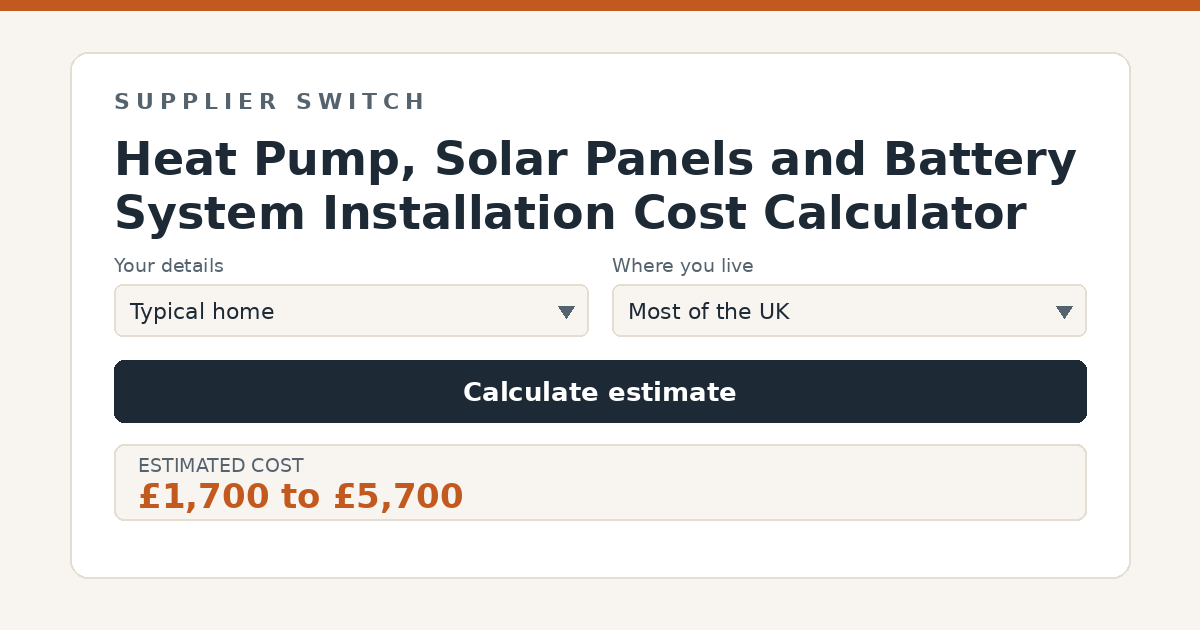
Estimate the combined cost of the full electrified home setup: an air source heat pump for heating, solar panels for generation and a battery for storage, net of the Boiler Upgrade Scheme grant.
Estimated combined net cost
All figures are indicative ranges based on published UK guides and scheme documentation. Real quotes, running costs and savings vary – see the explainer and disclaimer below.
How this calculator works
This calculator works in ranges rather than single figures, because real quotes, yields and tariffs genuinely vary that much. It starts from typical UK price, output and savings ranges drawn from published 2026 industry guides and official scheme documentation, then scales them by the quantities you enter and adjusts them for each choice you make below. The result is a low-to-high band that a realistic outcome is likely to fall within, not a promise of the figure you will achieve.
The full package for a typical three bedroom home, an 8 kW air source heat pump at to , a 4 kWp solar array at to and a 10 kWh battery at to , comes to roughly to before support, or to after the Boiler Upgrade Scheme grant, with the whole lot at 0 percent VAT until March 2027. Installing together shares scaffolding, electrical work and design, and typically undercuts buying the three separately.
Heat pump size
Heat pumps are sized in kilowatts of heat output, matched to your home’s heat loss rather than its floor area alone: a well insulated three bedroom home might need only 5 kW while a poorly insulated one needs 7.5 kW or more, and the official average UK installation is an 8 kW unit. Larger units cost more, but not proportionally, because design, labour and commissioning costs are similar at any size. An MCS installer must carry out a room-by-room heat loss calculation before quoting, which is the number that actually fixes the size.
Solar system size
A heat pump raises your electricity demand substantially, which strengthens the case for a larger solar array than a home without one would fit: each kWp generates roughly 850 kWh a year, and generation the heat pump or battery absorbs displaces grid electricity at full price rather than earning modest export rates. Homes pairing the two often size at 5 to 8 kWp where the roof allows.
Battery capacity
The battery is the hinge of the whole setup: it stores summer solar for evenings and, at least as valuably, charges from cheap overnight electricity in winter to run the heat pump through the morning peak. Homes running heat pumps on time-of-use tariffs commonly choose 10 kWh or more, since winter heating demand can absorb everything the battery holds.
Where you live
Installation labour is not priced uniformly across the UK, with published guides putting London and South East quotes roughly 15 to 25 percent above the national average. Hardware prices are broadly national, so the difference sits mostly in labour, access and overheads.
Boiler Upgrade Scheme grant
The Boiler Upgrade Scheme pays towards an eligible air source or ground source heat pump replacing a fossil fuel system in England and Wales, with the scheme extended to 2030. Your MCS-certified installer applies on your behalf and deducts the grant from the invoice, so you only ever pay the net amount. Scotland runs a parallel Home Energy Scotland scheme with grants up to , or in rural and island areas, plus optional interest-free loans, and eligible low income households may qualify for fully funded installations under ECO4.
What else affects the figures
The combination earns more than the sum of its parts: the heat pump gives solar generation somewhere valuable to go year-round, the battery shifts both solar and cheap overnight electricity into the expensive evening, and together they routinely cut total energy bills by half or more against a gas heated, grid supplied baseline. Sequencing matters if the budget cannot stretch to everything at once: insulation first, then whichever of the heat pump (when the boiler is due) or solar (for immediate bill cuts) fits your situation, with the battery easiest to add later provided the inverter is chosen battery-ready. A single installer designing the whole system, with one heat loss survey and one electrical design, avoids the finger-pointing that split responsibility invites.
Certification, planning and grid connection
Most air source heat pump installations fall under permitted development in England, provided the unit meets size and siting rules and the MCS 020 noise assessment, which requires no more than 42 decibels at the nearest neighbouring window, a point worth early attention in terraced housing; listed buildings and conservation areas need planning advice. Use an MCS-certified installer: certification is a condition of the Boiler Upgrade Scheme grant, and the installer applies for the grant and deducts it from your invoice. Residential heat pump installations carry 0 percent VAT until March 2027, and your installer handles building regulations notification and any electrical supply checks as part of the job.
Sources
The typical prices, yields and scheme details used by this calculator draw on the following published resources, which are good starting points for further research: