
Supplier Switch
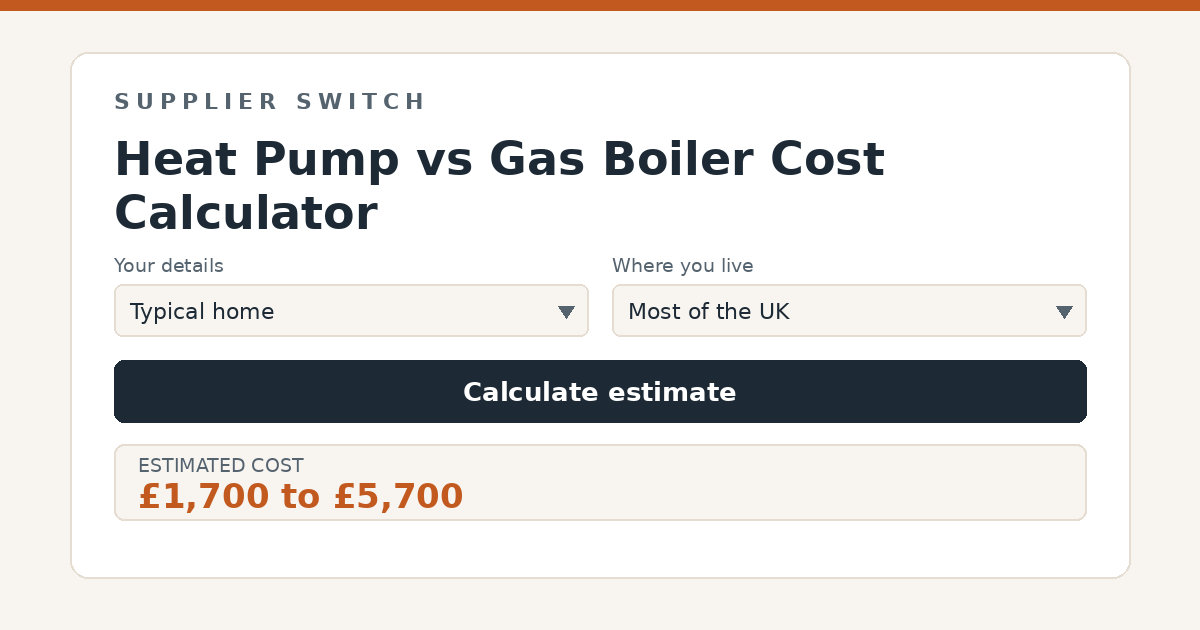
Heat Pump vs Gas Boiler Cost Calculator
Compare an air source heat pump against a new gas boiler on both installation cost and annual running cost, using 2026 price cap rates for electricity and gas.
Heat pump
Gas boiler
Estimated installation cost difference
Heat pump running cost
Gas boiler running cost
Estimated annual running cost difference
All figures are indicative ranges based on published UK guides and scheme documentation. Real quotes, running costs and savings vary – see the explainer and disclaimer below.
How this calculator works
This calculator works in ranges rather than single figures, because real quotes, yields and tariffs genuinely vary that much. It starts from typical UK price, output and savings ranges drawn from published 2026 industry guides and official scheme documentation, then scales them by the quantities you enter and adjusts them for each choice you make below. The result is a low-to-high band that a realistic outcome is likely to fall within, not a promise of the figure you will achieve.
A new gas boiler costs to installed against to for an air source heat pump, but the Boiler Upgrade Scheme grant brings the net heat pump cost to to , genuinely comparable. Running costs are closer than the raw fuel prices suggest: at April to June 2026 cap rates of 24.67 pence per kWh for electricity and 5.74 pence for gas, a heat pump at SCOP 3.5 delivers heat at roughly 7 pence per kWh against roughly 6.5 to 7.5 pence from a gas boiler at 85 to 92 percent efficiency.
Home size
Home size scales the installation estimates: larger homes need higher output units, more emitters and more labour, while flats and small houses sit below the typical three bedroom baseline that published guide prices describe. It does not scale the running cost estimates here, which follow the annual heat demand figure you enter instead.
Annual heat demand (kWh)
This is the heat your home needs over a year for space heating and hot water, not the fuel you buy. A typical UK three bedroom house needs roughly 10,000 to 14,000 kWh of heat a year; if you currently heat with gas, your annual gas kWh from your bill multiplied by about 0.85 (boiler efficiency) is a reasonable estimate of heat demand. Well insulated homes sit far lower and large or draughty ones far higher, and every running cost figure on this page scales directly with this number.
Where you live
Installation labour is not priced uniformly across the UK, with published guides putting London and South East quotes roughly 15 to 25 percent above the national average. Hardware prices are broadly national, so the difference sits mostly in labour, access and overheads.
Heat pump electricity tariff
The heat pump’s running cost depends heavily on its tariff: standard rates sit around 24.7 to 26.1 pence per kWh under the 2026 caps, while dedicated heat pump and time-of-use tariffs cut the effective rate by a quarter or more through cheap windows and smart scheduling. The comparison system’s fuel is priced at standard rates throughout, so the tariff choice here shows how much of the gap smart tariffs can close or open.
What else affects the figures
The running cost verdict hinges on two numbers you partly control: the SCOP your installation achieves, where 3.5 or better puts the heat pump level with or ahead of gas, and the tariff, where heat pump time-of-use rates tip the balance decisively, cutting bills to to a year for a typical home. Gas carries its own extras the headline rate hides, a standing charge of roughly to a year that disappears entirely if the home drops gas altogether, plus annual boiler servicing. Boilers last 10 to 15 years against 15 to 20 for heat pumps, and gas prices carry policy risk over that horizon. The fair summary for 2026: after the grant the upfront costs are comparable, running costs are a rough tie decided by installation quality and tariff, and the heat pump wins on lifespan and carbon.
Certification, planning and grid connection
Most air source heat pump installations fall under permitted development in England, provided the unit meets size and siting rules and the MCS 020 noise assessment, which requires no more than 42 decibels at the nearest neighbouring window, a point worth early attention in terraced housing; listed buildings and conservation areas need planning advice. Use an MCS-certified installer: certification is a condition of the Boiler Upgrade Scheme grant, and the installer applies for the grant and deducts it from your invoice. Residential heat pump installations carry 0 percent VAT until March 2027, and your installer handles building regulations notification and any electrical supply checks as part of the job.
Sources
The typical prices, yields and scheme details used by this calculator draw on the following published resources, which are good starting points for further research: