
Supplier Switch
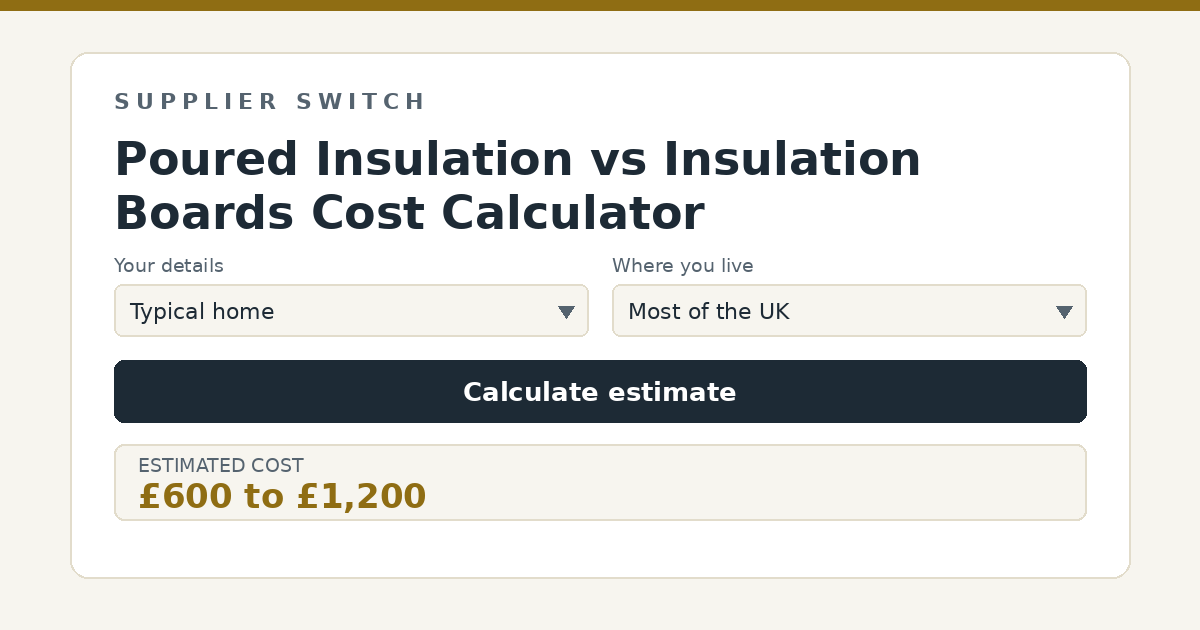
Poured Insulation vs Insulation Boards Cost Calculator
Compare poured and blown insulation, loose fill that is poured or machine-blown into place, against rigid insulation boards on installed cost.
Poured or blown insulation, installed
Rigid boards, fitted
Estimated cost difference
All figures are indicative ranges based on published UK guides and scheme documentation. Real quotes, running costs and savings vary – see the explainer and disclaimer below.
How this calculator works
This calculator works in ranges rather than single figures, because real quotes, yields and tariffs genuinely vary that much. It starts from typical UK price, output and savings ranges drawn from published 2026 industry guides and official scheme documentation, then scales them by the quantities you enter and adjusts them for each choice you make below. The result is a low-to-high band that a realistic outcome is likely to fall within, not a promise of the figure you will achieve.
Blown and poured insulation costs roughly to per square metre installed against to for fitted rigid boards in 2026, because loose fill installs at machine speed while boards install at carpentry speed. The poured family covers blown mineral wool and cellulose for lofts, EPS beads for cavities, and vermiculite and similar pourable fills for awkward voids, all sharing one talent: flowing into spaces that flat boards cannot address without labour.
Area to insulate (square metres)
Enter the area being treated, priced per square metre installed for both options so the totals compare directly. For roof underside work measure the slope area; for loft floor work measure the floor area, which matches the footprint of the rooms below.
Where you live
Installation labour is not priced uniformly across the UK, with published guides putting London and South East insulation quotes roughly 15 to 25 percent above the national average. Materials are broadly national in price, so the difference sits mostly in labour, access and parking.
What else affects the figures
The comparison is really about the shape of the job: irregular lofts with awkward joists, obstructed cavities, voids behind linings and hard-to-reach eaves are loose fill’s home ground, filled completely in hours through small openings, while flat accessible planes, roof slopes needing rigidity, floors needing something to walk on, and walls being dry-lined belong to boards, which also insulate better per millimetre and bring structure loose fill never can. Loose fill’s honest weaknesses are settlement over time, cellulose especially needs installing to the density its certificate specifies, vulnerability to wind-washing at exposed eaves without baffles, and total dependence on installer skill, since you cannot see a blown job’s coverage the way you can inspect laid boards. Where either could do the job, the price difference above usually decides it in loose fill’s favour.
Certification, planning and grid connection
If a calculation here prompts a project, Building Regulations Approved Document L is the standard the work should meet, with U-value targets for each element, and installers registered with TrustMark or a competent person scheme can self-certify compliance. Check grant eligibility before paying for anything: ECO4 runs to 31 December 2026 and the Great British Insulation Scheme continues alongside it, both funding measures partly or fully for qualifying households, and domestic insulation carries 0 percent VAT until 31 March 2027 in any case. An EPC assessment before and after larger projects evidences the improvement for future buyers and lenders.
Sources
The typical prices, yields and scheme details used by this calculator draw on the following published resources, which are good starting points for further research: