
Supplier Switch
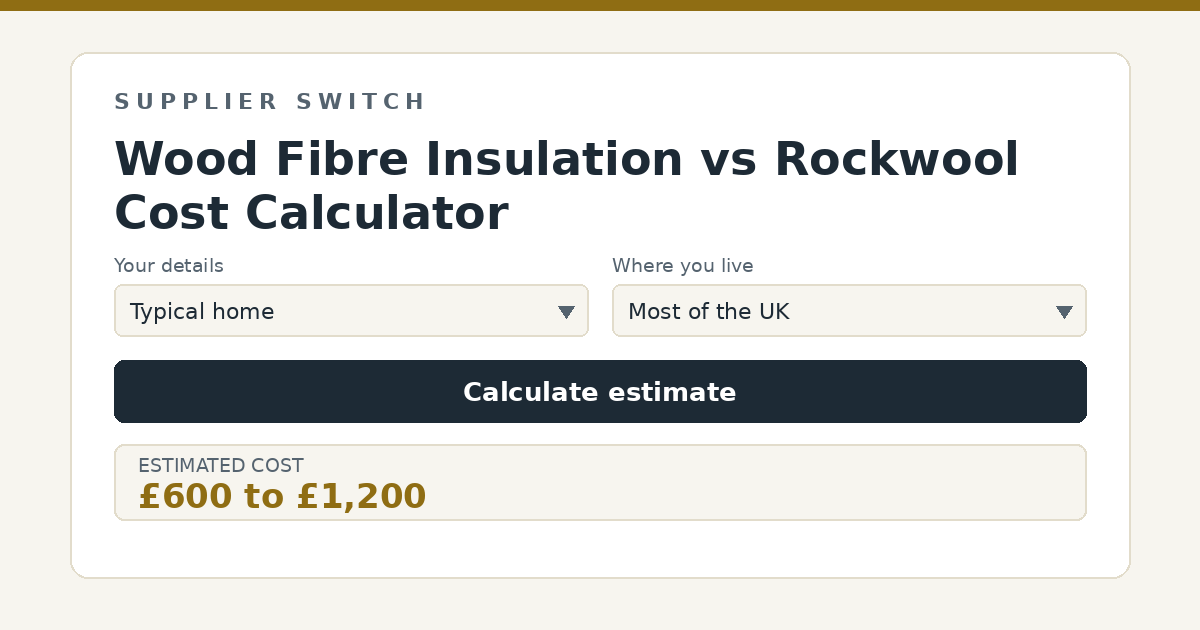
Wood Fibre Insulation vs Rockwool Cost Calculator
Compare wood fibre insulation, the natural breathable option, against ROCKWOOL stone mineral wool on cost for the same area.
Wood fibre insulation
ROCKWOOL mineral wool
Estimated cost difference
All figures are indicative ranges based on published UK guides and scheme documentation. Real quotes, running costs and savings vary – see the explainer and disclaimer below.
How this calculator works
This calculator works in ranges rather than single figures, because real quotes, yields and tariffs genuinely vary that much. It starts from typical UK price, output and savings ranges drawn from published 2026 industry guides and official scheme documentation, then scales them by the quantities you enter and adjusts them for each choice you make below. The result is a low-to-high band that a realistic outcome is likely to fall within, not a promise of the figure you will achieve.
Wood fibre costs roughly to per square metre at 100 mm class against to for stone mineral wool in 2026, a premium of three to four times for broadly similar thermal conductivity, wood fibre at 0.038 to 0.043 W/mK against stone wool’s 0.034 to 0.044. On pure insulation per pound stone wool wins by a distance; wood fibre’s case rests on properties beyond the U-value.
Area to insulate (square metres)
Enter the area to be covered in the material. Both options are priced per square metre for the same area so the totals compare directly; allow around 10 percent extra for cuts and waste when ordering boards, and check coverage per pack for rolls and quilts.
What else affects the figures
Wood fibre brings three things its price reflects: exceptional moisture buffering that absorbs and releases humidity harmlessly, making it the specification of choice for breathable construction, solid walls, timber frames, lime-plastered and listed buildings, where trapping moisture rots fabric; outstanding decrement delay, the density-driven slowing of summer heat through roofs that keeps attic rooms cooler; and genuine sustainability credentials, storing carbon rather than emitting it in manufacture. Stone wool counters with non-combustibility that wood fibre cannot match, superb acoustics of its own, total rot and pest indifference, and that unbeatable price. The materials rarely truly compete: conventional cavity-walled and modern homes have no need of wood fibre’s breathability and should bank stone wool’s savings, while heritage and eco-build projects specify wood fibre for reasons the comparison price does not capture. Both are pleasant, safe materials to live with.
Certification, planning and grid connection
If a calculation here prompts a project, Building Regulations Approved Document L is the standard the work should meet, with U-value targets for each element, and installers registered with TrustMark or a competent person scheme can self-certify compliance. Check grant eligibility before paying for anything: ECO4 runs to 31 December 2026 and the Great British Insulation Scheme continues alongside it, both funding measures partly or fully for qualifying households, and domestic insulation carries 0 percent VAT until 31 March 2027 in any case. An EPC assessment before and after larger projects evidences the improvement for future buyers and lenders.
Sources
The typical prices, yields and scheme details used by this calculator draw on the following published resources, which are good starting points for further research: