
Supplier Switch
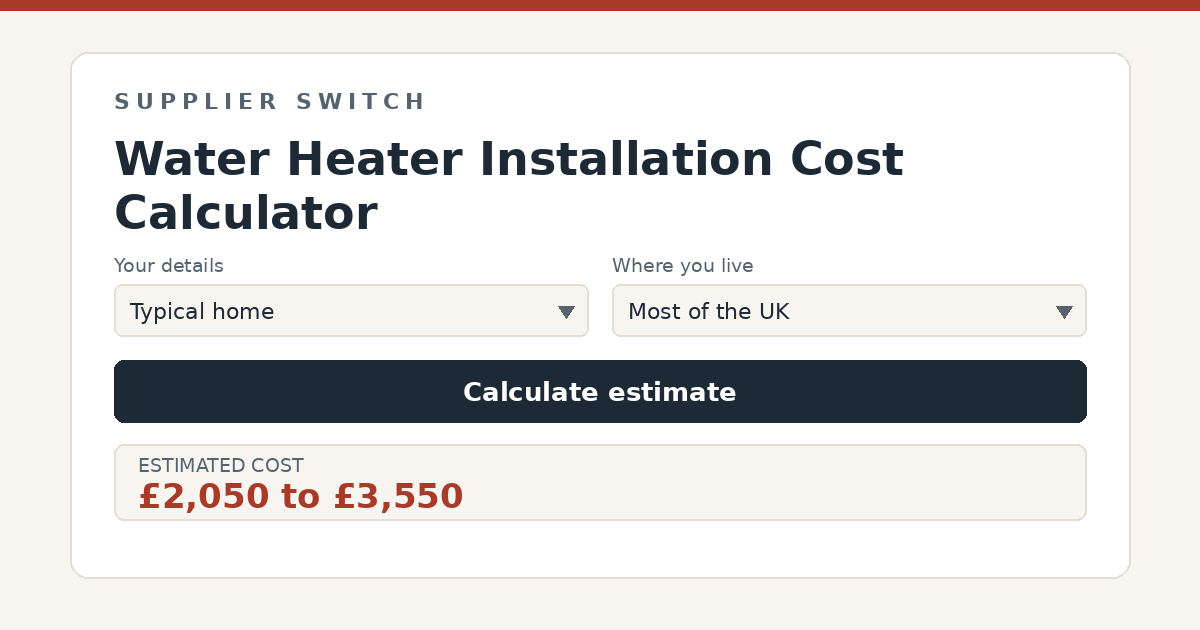
Water Heater Installation Cost Calculator
Estimate the cost of installing a dedicated water heater, from an under-sink unit for a distant tap to a full pressurised hot water cylinder, using 2026 UK prices.
Estimated installed cost
All figures are indicative ranges based on published UK guides and scheme documentation. Real quotes, running costs and savings vary – see the explainer and disclaimer below.
How this calculator works
This calculator works in ranges rather than single figures, because real quotes, yields and tariffs genuinely vary that much. It starts from typical UK price, output and savings ranges drawn from published 2026 industry guides and official scheme documentation, then scales them by the quantities you enter and adjusts them for each choice you make below. The result is a low-to-high band that a realistic outcome is likely to fall within, not a promise of the figure you will achieve.
Dedicated water heaters run from to installed for point-of-use and inline units, to for a vented cylinder with immersion, and to for an unvented mains-pressure cylinder in 2026. Each solves a different problem: point-of-use units beat long pipe runs to occasional taps, saving both installation cost and the water wasted running a distant tap hot, while cylinders provide whole-home hot water where there is no combi or where flow demands exceed what any combi can deliver.
Water heater type
Point-of-use heaters store a few litres above or below one sink, perfect for a distant cloakroom, garage or outbuilding where running pipework from the boiler would cost more than the heater. Instantaneous units heat water as it flows, endless but modest in flow. Cylinder options serve whole homes: a vented cylinder with immersion is the traditional tank-fed setup, while an unvented pressurised cylinder delivers mains-pressure hot water to every tap, the premium option at to installed and legally G3-qualified work.
Home size
Home size scales the installation estimates: larger homes need higher output units, bigger cylinders where fitted and sometimes more pipework, while flats and small houses sit below the three bedroom baseline that published guide prices describe. It does not scale the running cost figures, which follow the demand number you enter instead.
Where you live
Heating labour is not priced uniformly across the UK, with published guides putting London and South East installation quotes roughly 15 to 25 percent above the national average. The hardware costs the same everywhere, so the difference sits in engineer day rates, access and parking.
What else affects the figures
Running cost divides the category: electric water heaters cost roughly four times gas per unit of hot water on a standard tariff, fine for a cloakroom sink used seconds a day and expensive as a whole-home strategy without an off-peak tariff, which is where cylinder timing and smart controls earn their keep. Unvented cylinders bring rules of their own, since a sealed vessel of hot water is a pressure system: installation and servicing are restricted to G3-qualified engineers, the work is building regulations notifiable, and the discharge pipework is a safety system rather than plumbing decoration, all good reasons this is no place for the cheapest quote. In hard water areas, scale protection extends every water heater’s life, and for outbuildings, insulating the little pipework there is matters as much as the heater’s own rating.
Certification, planning and grid connection
Hot water work splits along a regulatory line: vented cylinders and point-of-use heaters are ordinary plumbing and Part P electrical work, while unvented pressurised cylinders are legally restricted to G3-qualified installers and are notifiable under Building Regulations, because a sealed cylinder of hot water is a pressure vessel whose safety devices and discharge pipework must be right. Immersion heater circuits belong to qualified electricians, water byelaws govern connections and backflow protection, and in hard water areas scale protection is worth specifying at installation. Cylinder thermostats around 60 to 65 degrees Celsius balance legionella safety against scale and running cost.
Sources
The typical prices, yields and scheme details used by this calculator draw on the following published resources, which are good starting points for further research: