Supplier Switch
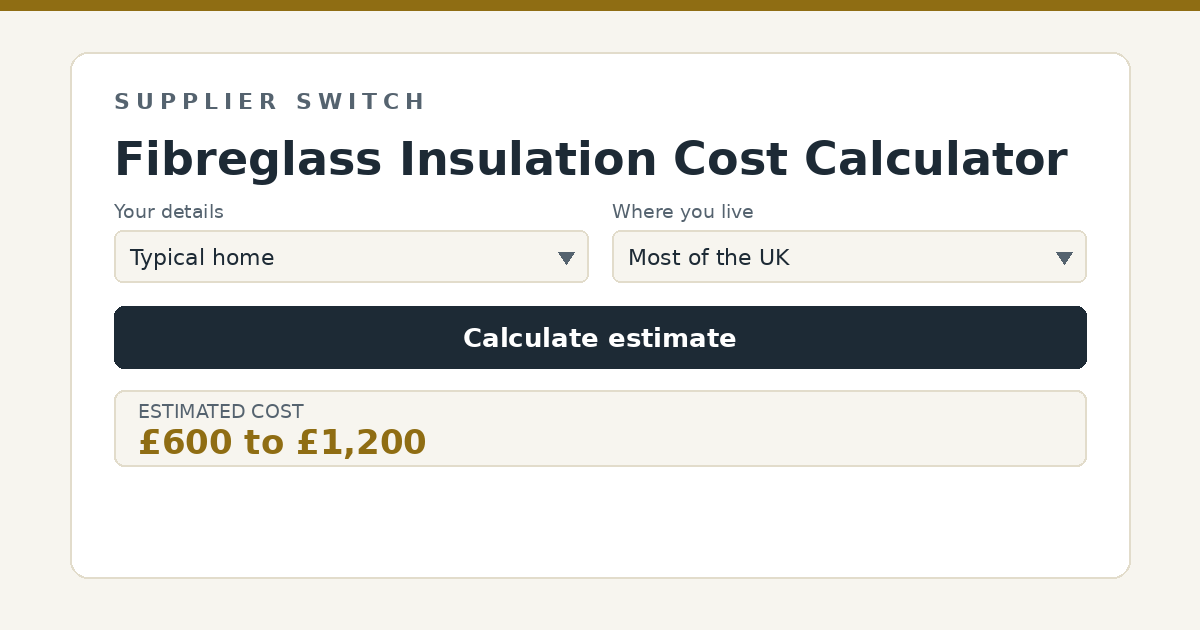
Fibreglass Insulation Cost Calculator
Estimate the cost of fibreglass (glass mineral wool) insulation, the classic yellow loft roll and the cheapest mainstream insulation material in the UK.
Estimated cost
All figures are indicative ranges based on published UK guides and scheme documentation. Real quotes, running costs and savings vary – see the explainer and disclaimer below.
How this calculator works
This calculator works in ranges rather than single figures, because real quotes, yields and tariffs genuinely vary that much. It starts from typical UK price, output and savings ranges drawn from published 2026 industry guides and official scheme documentation, then scales them by the quantities you enter and adjusts them for each choice you make below. The result is a low-to-high band that a realistic outcome is likely to fall within, not a promise of the figure you will achieve.
Fibreglass loft roll costs roughly to per square metre per 100 mm layer, putting a full 270 mm build-up at to per square metre supply-only and a typical loft’s materials at to in 2026, with professional installation bringing the whole job to to . Glass mineral wool has insulated more UK lofts than every other material combined: cheap, non-combustible, rot-proof and effective for 40 years or more if kept dry and uncompressed.
Area to insulate (square metres)
Enter the area to be covered, typically the loft floor: 40 to 55 square metres for a semi. Rolls come in standard widths sized to joist spacings, with coverage per roll falling as thickness rises.
Thickness
The recommended loft standard is around 270 mm, normally built from a 100 mm layer between the joists and a 170 mm layer crossing over them. Single layers suit top-ups of existing insulation, and the calculator’s pricing reflects the material for each build-up. Glass wool compresses badly, so squashing thick rolls under boarding destroys their performance, which is what raised loft legs exist to prevent.
Supply or fitted
Loft rolls are the most DIY-friendly insulation going, and laying them yourself saves to on a typical loft; gloves, a mask and long sleeves deal with the itch. Professional fitting adds the labour but includes the details that matter, keeping eaves ventilation clear, lagging pipes and tanks, and insulating the hatch.
What else affects the figures
Modern glass wool is meaningfully nicer to handle than the fibreglass of memory, with bonded, lower-itch products from Knauf, Isover and URSA, though a mask and gloves remain sensible. Its limits are density and moisture: it slumps in walls unless specified in the right batt form, performs poorly if damp, and needs roughly twice the thickness of PIR for the same result, which is no problem across a loft floor and a real problem in a thin wall. Between glass wool and its rock wool sibling, glass is lighter and cheaper while rock adds density, acoustic mass and fire performance, a choice covered in detail by our mineral wool comparison calculators below.
Certification, planning and grid connection
If a calculation here prompts a project, Building Regulations Approved Document L is the standard the work should meet, with U-value targets for each element, and installers registered with TrustMark or a competent person scheme can self-certify compliance. Check grant eligibility before paying for anything: ECO4 runs to 31 December 2026 and the Great British Insulation Scheme continues alongside it, both funding measures partly or fully for qualifying households, and domestic insulation carries 0 percent VAT until 31 March 2027 in any case. An EPC assessment before and after larger projects evidences the improvement for future buyers and lenders.
Sources
The typical prices, yields and scheme details used by this calculator draw on the following published resources, which are good starting points for further research: