
Supplier Switch
Sash Windows Installation and Replacement Cost Calculator
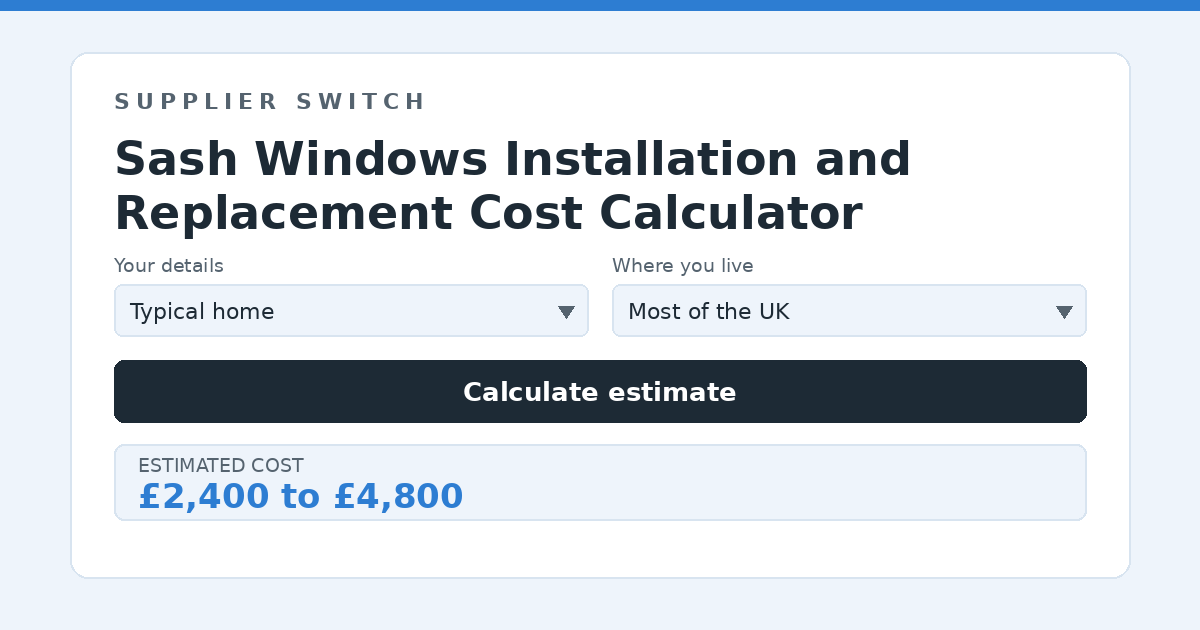
Estimate the cost of installing or replacing sliding sash windows. Sash windows use a vertical sliding mechanism in a box frame and carry a clear premium over casement windows.
Estimated total cost range
All figures are indicative supply-and-fit ranges based on published UK cost guides. Real quotes vary with site conditions, access and specification – see the explainer and disclaimer below.
How this calculator works
This calculator estimates a realistic price range rather than a single figure, because real-world quotes genuinely vary that much. It starts from typical UK supplied-and-fitted price ranges drawn from published 2026 industry cost guides, then multiplies them by the number of units you enter and by adjustment factors for each choice you make below. The result is a low-to-high band that a fair quote is likely to fall within, not a promise of the exact price you will pay.
Sash windows are considerably more expensive than casements because the sliding mechanism, spring balances and box frame require more engineering and more careful installation. In 2026, fitted sash windows typically start around to in uPVC and rise well beyond per window for quality timber. In conservation areas, planning policies often require sash designs on street-facing elevations, which can limit cheaper options.
Number of sash windows
Enter how many sash windows you want installed or replaced. Sash windows are most common on Victorian, Edwardian and Georgian properties, where a typical terraced or semi-detached house might have 6 to 10 of them on the front and rear elevations.
Window size
Size is one of the biggest cost drivers for any glazed unit. A larger opening needs more frame material and a bigger, heavier sealed glass unit, and it usually takes longer to fit. The calculator uses three broad size bands based on common UK window dimensions: choosing the small band reduces the typical range by around 20 percent, while the large band increases it by around 40 percent. If your windows vary in size, run the calculator once per size band and add the results together.
Frame material
Published 2026 guides put fitted uPVC sash windows at roughly to each depending on size and specification, softwood timber at roughly to , hardwood at to , and aluminium at to . uPVC sash windows have become the default for most homes because they replicate the traditional look with far less maintenance, while timber remains essential for many listed buildings and conservation areas.
Specification level
Two windows that look similar from the street can sit at very different price points. Budget products use simpler profiles, standard hardware and basic glass. Mid-range covers the typical A-rated units most UK installers quote by default. Premium covers high-end systems with upgraded security hardware, better thermal performance, special finishes or designer profiles, and typically adds around 30 percent to the price.
Where you live
Labour rates are not uniform across the UK. Published cost guides consistently show installation prices in London and the South East running roughly 20 to 30 percent above the national average, driven by higher labour costs, travel, parking and congestion charges. The calculator applies an uplift of around 20 percent if you select London and the South East. Product prices themselves are broadly similar nationwide, so the difference mostly reflects fitting costs.
What else affects the price
The biggest sash-specific cost factors are whether you are replacing the full box frame or just the sliding sashes, and how faithful the replacement needs to be to the original. Heritage details such as run-through sash horns, deep bottom rails, slim meeting rails and astragal glazing bars all add cost, with published guides suggesting a 20 to 30 percent premium for conservation-grade designs. Woodgrain and coloured finishes typically add 30 to 50 percent over standard white uPVC, and arched heads can add around per window.
Planning permission, building regulations and certification
Like-for-like window replacement on most houses does not need planning permission, but listed buildings always require consent and conservation areas often restrict materials and styles on visible elevations, so check with your local planning authority if either applies. Building regulations apply to every replacement window in a dwelling, setting minimum energy performance and safety glazing standards. Installers registered with a competent person scheme, such as FENSA or Certass, can self-certify compliance and issue a certificate after completion; otherwise you must arrange building control sign-off separately. Keep the certificate safe, as buyers’ solicitors routinely ask for it when you sell.
Sources
The typical price ranges and guidance used by this calculator draw on the following published resources, which are good starting points for further research: