
Supplier Switch
Soundproof Windows Installation and Replacement Cost Calculator
Estimate the cost of soundproof windows for a home affected by traffic, rail, aircraft or street noise. Soundproofing covers a spectrum from acoustic replacement windows to secondary glazing fitted inside your existing windows.
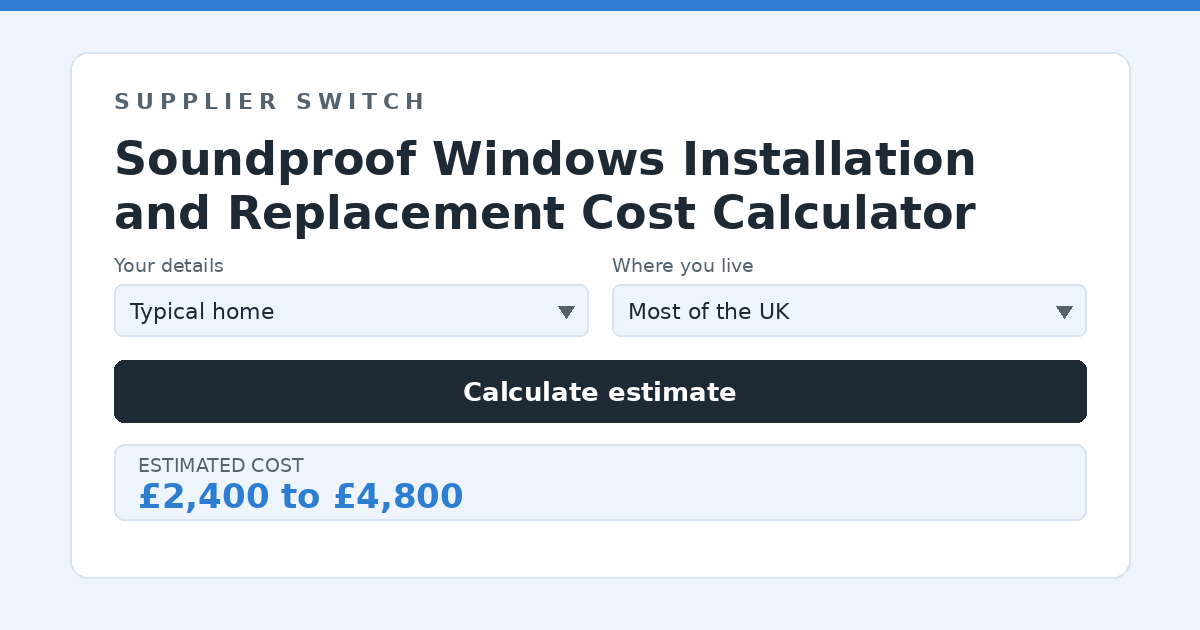
Estimated total cost range
All figures are indicative supply-and-fit ranges based on published UK cost guides. Real quotes vary with site conditions, access and specification – see the explainer and disclaimer below.
How this calculator works
This calculator estimates a realistic price range rather than a single figure, because real-world quotes genuinely vary that much. It starts from typical UK supplied-and-fitted price ranges drawn from published 2026 industry cost guides, then multiplies them by the number of units you enter and by adjustment factors for each choice you make below. The result is a low-to-high band that a fair quote is likely to fall within, not a promise of the exact price you will pay.
Soundproof window costs in 2026 range from roughly to per window for secondary glazing up to to for acoustic double glazed replacements, with specialist high performance units beyond that. For context, standard double glazing blocks roughly 28 to 32 decibels; a well specified acoustic window reaches 37 to 41, and secondary glazing with a deep cavity can reach 45 to 50, which is transformative next to a busy road.
Number of windows to treat
Enter how many windows you want to soundproof. Many households treat only the rooms that matter most, typically bedrooms and living rooms facing the noise source, which keeps the project affordable.
Window size
Size is one of the biggest cost drivers for any glazed unit. A larger opening needs more frame material and a bigger, heavier sealed glass unit, and it usually takes longer to fit. The calculator uses three broad size bands based on common UK window dimensions: choosing the small band reduces the typical range by around 20 percent, while the large band increases it by around 40 percent. If your windows vary in size, run the calculator once per size band and add the results together.
Soundproofing approach
Acoustic replacement windows use laminated glass and asymmetric pane thicknesses to reach roughly 37 to 41 decibels of reduction, at around to per window fitted. Secondary glazing, a separate pane fitted inside your existing window with a large air gap, can actually outperform replacement windows acoustically, reaching 45 decibels or more, at roughly half the cost, and it is often the only permitted option in listed buildings. High specification acoustic units for severe noise, such as flight paths or main rail lines, use thicker laminated build-ups and cost considerably more.
Specification level
Two windows that look similar from the street can sit at very different price points. Budget products use simpler profiles, standard hardware and basic glass. Mid-range covers the typical A-rated units most UK installers quote by default. Premium covers high-end systems with upgraded security hardware, better thermal performance, special finishes or designer profiles, and typically adds around 30 percent to the price.
Where you live
Labour rates are not uniform across the UK. Published cost guides consistently show installation prices in London and the South East running roughly 20 to 30 percent above the national average, driven by higher labour costs, travel, parking and congestion charges. The calculator applies an uplift of around 20 percent if you select London and the South East. Product prices themselves are broadly similar nationwide, so the difference mostly reflects fitting costs.
What else affects the price
In acoustics, mass and asymmetry beat pane count: laminated glass and two different glass thicknesses outperform simply adding a third identical pane, so triple glazing is not automatically the best noise solution. Installation quality matters enormously, since gaps around the frame can halve the effective performance, and good acoustic installers pay as much attention to perimeter sealing as to the glass. If you live near a major airport, check its noise insulation grant scheme before paying yourself, as Heathrow, Gatwick, Stansted and others fund acoustic glazing and secondary glazing for properties within defined noise contours.
Planning permission, building regulations and certification
Like-for-like window replacement on most houses does not need planning permission, but listed buildings always require consent and conservation areas often restrict materials and styles on visible elevations, so check with your local planning authority if either applies. Building regulations apply to every replacement window in a dwelling, setting minimum energy performance and safety glazing standards. Installers registered with a competent person scheme, such as FENSA or Certass, can self-certify compliance and issue a certificate after completion; otherwise you must arrange building control sign-off separately. Keep the certificate safe, as buyers’ solicitors routinely ask for it when you sell.
Sources
The typical price ranges and guidance used by this calculator draw on the following published resources, which are good starting points for further research: